
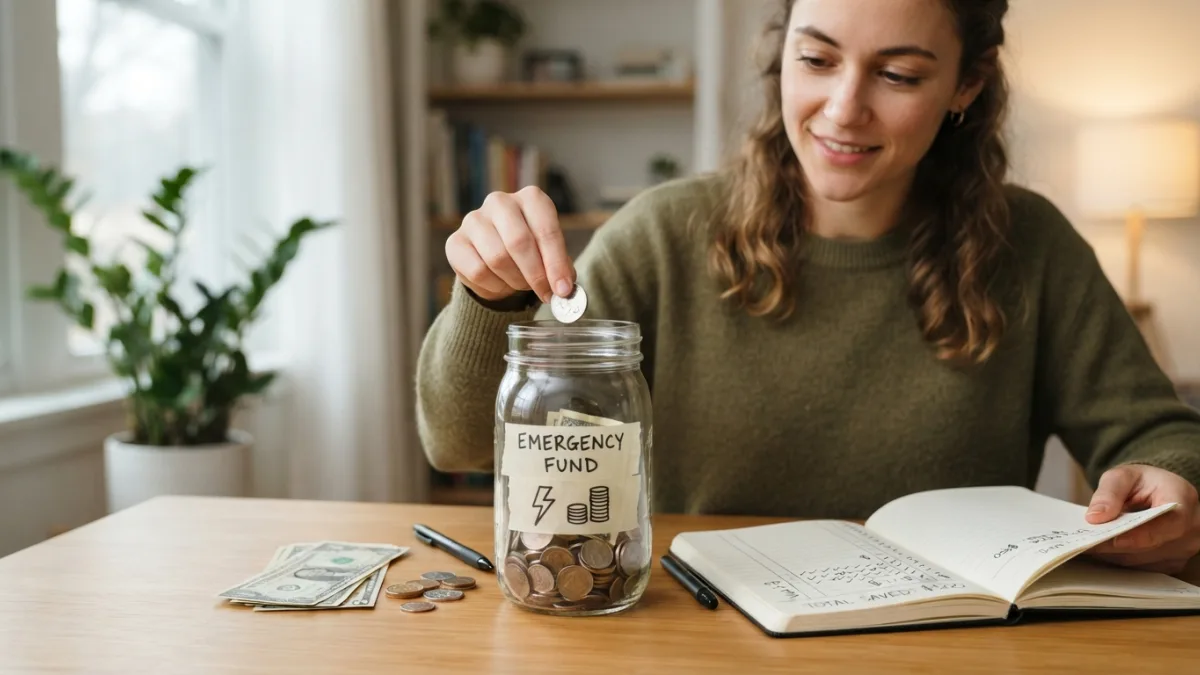
Emergency Fund: 5 Easy Steps to Save Your First $500
Living paycheck to paycheck feels like running on a treadmill that never slows down. You work hard, the money comes in, and then it disappears just as fast into rent, groceries, and gas. If your car breaks down or a medical bill shows up unannounced, there’s nothing left to fall back on. That’s exactly why building an emergency fund matters so much, even if you can only start with $500. It’s not a magic number that solves every problem, but it’s enough to cover a flat tire, a broken phone, or a few days without a paycheck without reaching for a credit card.
Roughly 60 percent of Americans report living paycheck to paycheck at some point, according to surveys from major financial institutions, and that number doesn’t discriminate by income level. People earning six figures can be just as stretched thin as those earning minimum wage, usually because expenses expand to match whatever comes in. The good news is that saving your first $500 doesn’t require a six-month budgeting overhaul or a finance degree. It requires a plan, a little discipline, and 60 days of consistent small choices. Below are five practical steps that can help you build that first cushion of safety without turning your life upside down. If you want to dig deeper, our guide on Building an Emergency Fund From Zero covers this in more detail. This is a common part of dealing with emergency fund, and it is worth keeping in mind.
Step 1: Set a Specific 60-Day Savings Goal
Vague goals like “I should save more” rarely work because there’s no finish line to aim for. Instead, break your $500 target into smaller, digestible chunks. Saving $500 in 60 days means setting aside roughly $8.34 a day, or about $58 a week. Written that way, it feels far less intimidating than a lump sum. Write the number down somewhere you’ll actually see it: a sticky note on your fridge, a reminder on your phone, or a note taped inside your wallet. According to the Consumer Financial Protection Bureau’s savings guidance, breaking large goals into smaller weekly targets makes people significantly more likely to follow through than when they focus on the total amount alone. Many people run into this exact issue with emergency fund at some point.
Once you have your daily or weekly number, decide exactly which days you’ll transfer money and how much. Some people do it every payday; others do it daily through a round-up app. The method matters less than the consistency. Missing one day isn’t the end of the world, but try to make up for it within the same week so your 60-day countdown stays realistic. This step is really about turning an abstract idea into a concrete plan you can track, which is one of the simplest budgeting tips for beginners who have never saved consistently before. Keeping emergency fund in mind here will save you time later on.
Step 2: Track Every Dollar for One Week
You can’t fix a leak you can’t see, and most people who live paycheck to paycheck have no clear picture of where their money actually goes. Before cutting anything, spend seven days writing down every single purchase, from your morning coffee to your streaming subscriptions. Use a notes app, a spreadsheet, or even a plain notebook. This exercise usually reveals at least one surprising pattern, like spending $40 a week on takeout without realizing it, or paying for two subscriptions you forgot you had. This detail matters more than it seems once emergency fund comes up again.
Once the week is over, sort your spending into categories: needs, wants, and things you barely remember buying. This is the foundation of personal finance basics that so many money experts talk about, and it works because awareness naturally changes behavior. People tend to spend less simply because they know they’ll have to write it down. Use this tracking period to identify two or three easy targets you can shrink or eliminate over the next 60 days without feeling deprived. This connects closely with another common issue — see How to Save Money on Groceries With a Family of Four (Without Clipping Coupons All Day) for more on that. It is one of those small things that makes emergency fund easier to manage overall.
Step 3: Cut Three Expenses You Won’t Miss
Now it’s time to act on what you found. Look for expenses that feel automatic rather than meaningful. Common candidates include: This is a common part of dealing with emergency fund, and it is worth keeping in mind.
- Unused subscriptions or streaming services you forgot to cancel
- Daily coffee shop visits that could become a homemade version a few times a week
- Impulse online purchases, especially anything bought late at night
- Bank fees that can be avoided by switching accounts or setting up alerts
- Grocery habits like buying pre-cut produce or name-brand staples when generic works fine
Pick three of these and commit to cutting them for the full 60 days. You don’t need to overhaul your entire lifestyle, just redirect a handful of small leaks straight into your new savings account. If cutting a $15 subscription and skipping two coffee runs a week saves you around $35, that’s already more than half of your weekly $58 target covered without touching your paycheck. Small, boring cuts like these are often more sustainable than dramatic ones because they don’t trigger the frustration that leads people to quit halfway through. Many people run into this exact issue with emergency fund at some point.
Step 4: Automate Transfers Into a Separate Emergency Fund
Willpower is unreliable, especially when money is sitting in an account you check every day. The most effective way to actually start an emergency fund is to make saving automatic so you never have to decide to do it. Open a separate savings account, ideally one that doesn’t come with a debit card attached, so the money is a little harder to touch on impulse. Many online banks offer no-fee savings accounts with decent interest rates, and some even let you set up automatic transfers the same day your paycheck lands. Keeping emergency fund in mind here will save you time later on.
Schedule a transfer for the morning after payday, before you have a chance to spend that money elsewhere. Even if it’s a modest amount, paying yourself first is one of the oldest and most reliable rules in personal finance, and it works because it removes decision fatigue from the equation. If your income varies week to week, consider a percentage-based transfer instead of a fixed number, so you’re always saving something even during leaner weeks. You might also find our article on How to Save Money on Groceries Without Coupons helpful here. This detail matters more than it seems once emergency fund comes up again.
Choosing the Right Account for Your $500 Goal
Not every account works equally well for a short-term emergency fund. You want something safe, accessible within a day or two, and separate enough from your checking account that it doesn’t feel like extra spending money. The table below compares three common options people use when they start an emergency fund from scratch. It is one of those small things that makes emergency fund easier to manage overall.
| Account Type | Access Speed | Typical Interest | Best For |
|---|---|---|---|
| Traditional Savings Account | Same day or next day | Low | Beginners who want simplicity |
| High-Yield Online Savings Account | 1–2 business days | Higher than average | People comfortable with online-only banking |
| Cash Envelope at Home | Instant | None | Those who struggle with digital spending temptation |
The FDIC’s overview of deposit insurance is worth a quick look before choosing a bank, since it confirms your money is protected up to $250,000 as long as the institution is federally insured. This matters more than people think, because peace of mind about safety is part of what keeps you from pulling money out early out of anxiety. This is a common part of dealing with emergency fund, and it is worth keeping in mind.
Step 5: Add Small Bursts of Extra Income
Cutting expenses only goes so far, especially if your budget is already tight. The fastest way to save money fast over 60 days is to combine spending cuts with small, temporary income boosts. You don’t need a second job for this. Selling unused items around your home, picking up a few hours of freelance work, walking dogs on weekends, or doing a couple of delivery shifts can realistically add $50 to $150 over two months. Even babysitting for a neighbor once or twice can move the needle.
Treat this extra income as untouchable the moment it arrives. Don’t let it drift into your regular spending; send it straight into your emergency fund account the same day you earn it. This habit reinforces the idea that any money earned outside your usual paycheck exists specifically to build your safety net, not to fund a treat or a night out. Over 60 days, these small bursts often make the difference between reaching $500 comfortably and falling just short. For a related walkthrough, check out Frugal Living for Beginners: 21 Easy Changes to Try.
Staying Motivated Until You Hit $500
Sixty days is short enough to stay motivated but long enough that momentum can fade around week three or four. Combat this by checking your progress weekly rather than daily, since daily numbers can feel discouragingly small. Consider a visual tracker, like a printable thermometer chart or a simple checklist, and mark your progress every time you hit a milestone like $100 or $250. Small celebrations, even something as simple as telling a friend you passed the halfway mark, help keep the goal emotionally real instead of just a number in an app.
If you slip up one week and spend more than planned, don’t abandon the whole plan. Adjust the following week’s target slightly and keep going. According to general guidance from Wikipedia’s overview of personal budgeting, flexibility within a structured plan tends to produce better long-term results than rigid all-or-nothing approaches. The goal isn’t perfection over 60 days; it’s building a habit that sticks well beyond the day you hit $500.
Frequently Asked Questions
Why is $500 considered a good starting emergency fund?
Five hundred dollars covers most small, unexpected costs like a car repair, a medical copay, or a temporary loss of income for a few days. It’s a realistic first milestone before working toward a larger fund that covers three to six months of expenses.
What if I can’t save $58 a week?
Adjust your timeline rather than giving up. Saving $500 in 90 or 120 days is still a huge win compared to having no emergency fund at all. The daily amount matters far less than the consistency behind it.
Should I pay off debt before starting an emergency fund?
Most financial experts suggest saving a small starter fund first, even while paying minimum debt payments, because it prevents new debt from unexpected expenses. Once you hit $500, you can shift more focus toward paying down balances.
Where should I keep my emergency fund?
A separate savings account, ideally one without an attached debit card, works best. It keeps the money accessible within a day or two while making it less tempting to spend on everyday purchases.
What counts as a true emergency versus a regular expense?
A true emergency is unexpected, necessary, and urgent, such as a medical bill, essential car repair, or sudden job loss. Planned expenses like holiday gifts or vacations should come from a separate savings category, not your emergency fund.